Creating Habitat in the Water Meadows
Supporting freshwater habitat, wildlife access and wider nature recovery through the Tendring Farm Cluster
Through the Tendring Farm Cluster Pond Restoration Fund, participating cluster members can access up to £750 to support pond restoration and freshwater habitat projects. The fund is designed to help with the design, facilitation and delivery of practical work that restores, creates or enhances ponds across the cluster area.
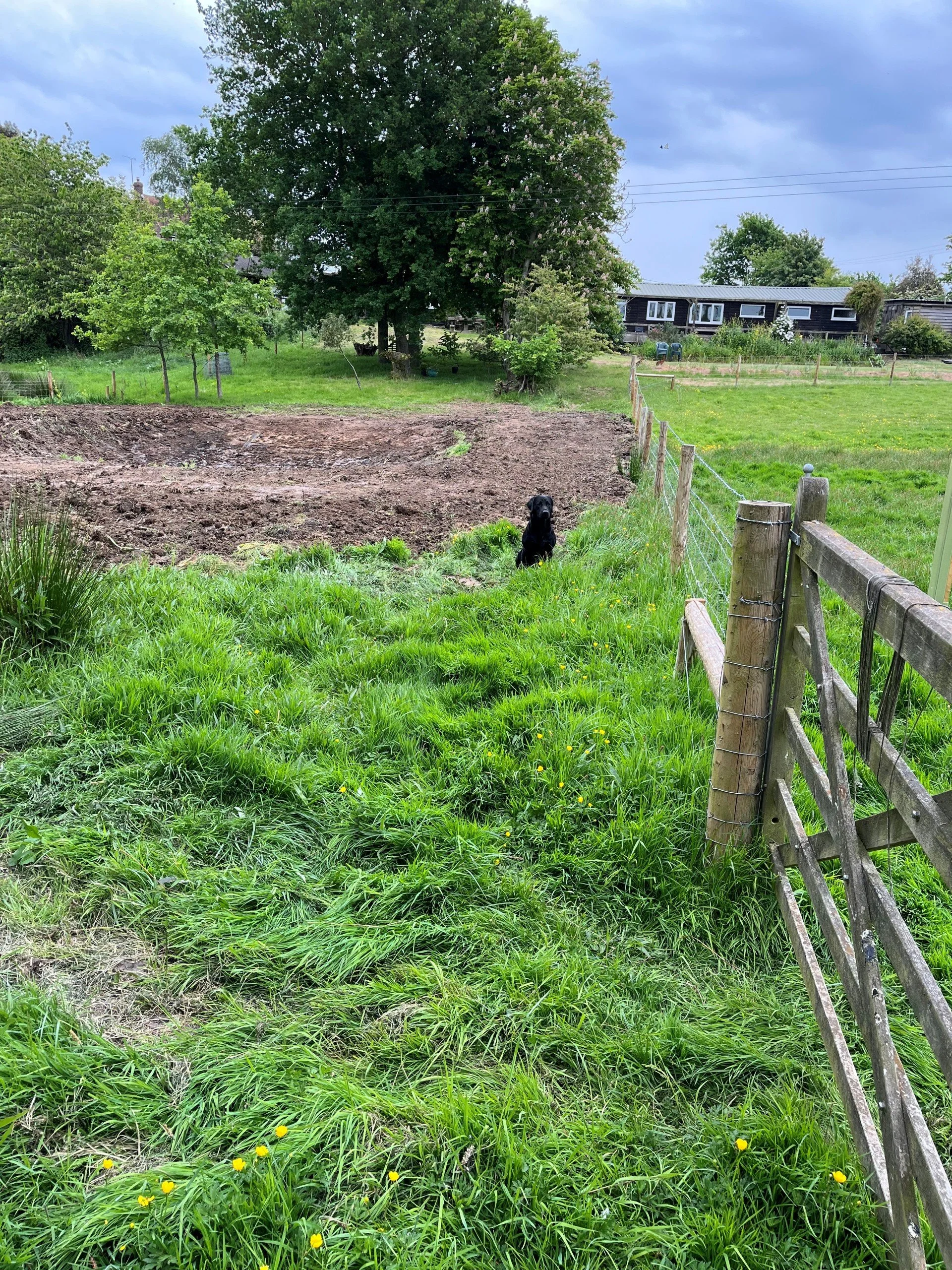
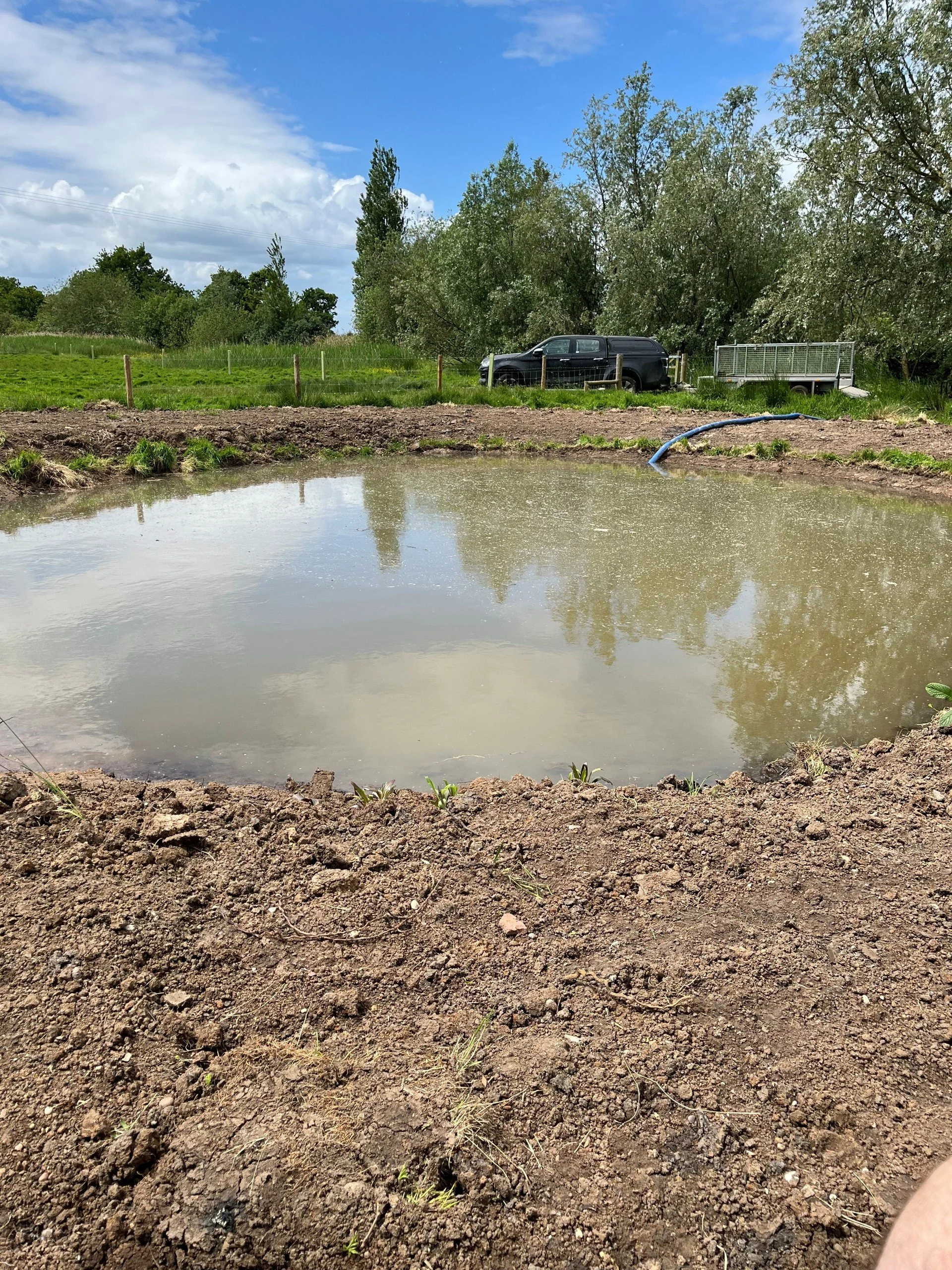
This case study highlights a pond creation project at Bryher Beef / Watershed Studio, where a new pond was dug below the studio in the farm's water meadows in spring 2025. The project was developed to improve access, create a stronger freshwater habitat resource and provide a new wildlife feature within an already wet landscape.
The site sits close to a brook and within a water meadow setting, where winter wetness and irrigation management can make access difficult at certain times of year. By using the excavated material to form raised banks and paths either side of the pond, the project has improved year-round access for maintenance and observation while also creating new pond-edge habitat.
The pond was designed with several practical and ecological aims in mind. It provides a more accessible water source for wildlife, with fewer physical barriers from fencing or dense reed growth, and increases the amount of open freshwater habitat available for pond and water meadow species. It has also created a feature that can be seen from the studio, helping to bring the wildlife value of the water meadows into everyday view.
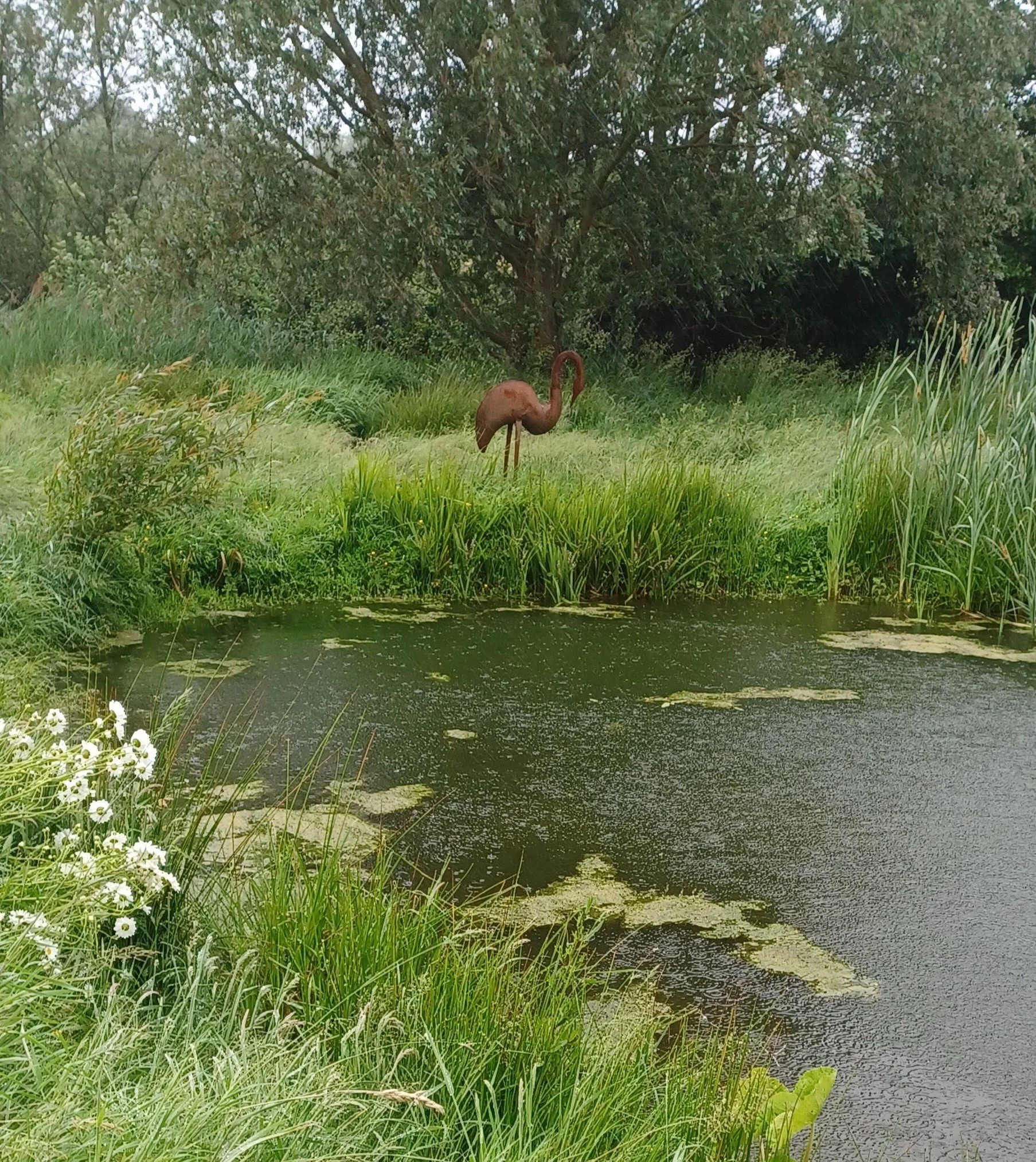
The work builds on earlier habitat creation across the holding. Richard Hull had previously created seven other ponds around the farm through a FWAG scheme. Although these ponds became dry during the summer, their value is clear from the wildlife footprints around the margins, showing how well these small freshwater features are used when conditions allow.
Richard dug the Watershed Studio pond in just a few hours, using spoil from the excavation to shape the surrounding access routes. The pond was filled from the brook so that the developing ecosystem would be closely connected to the existing watercourse and local freshwater conditions.
The response from wildlife was immediate. The pond quickly became full of activity, with dragonflies and damselflies using the new habitat, bees accessing the water and aquatic invertebrates such as water boatmen and whirligig beetles appearing. Fish, including baby roach and sticklebacks, have also been seen, while pond vegetation has established naturally without active planting!
The wider water meadow setting has continued to attract a range of birds and mammals, including heron, ducks, egrets and foxes. Although great crested newts have not yet been recorded in the ponds, the site is increasing the availability of small freshwater habitats across the farm, which can support a broad range of species over time.
This project demonstrates how a relatively small, practical intervention can deliver multiple benefits. In one piece of work, the farm has improved access, created open water, enhanced pond-edge habitat and added a feature that supports observation and appreciation of the wildlife already using the water meadows. The success of the pond has already encouraged further ambition, with plans being considered for another, larger pond further along the water meadow.